How to Reduce Missed Calls in Field Service
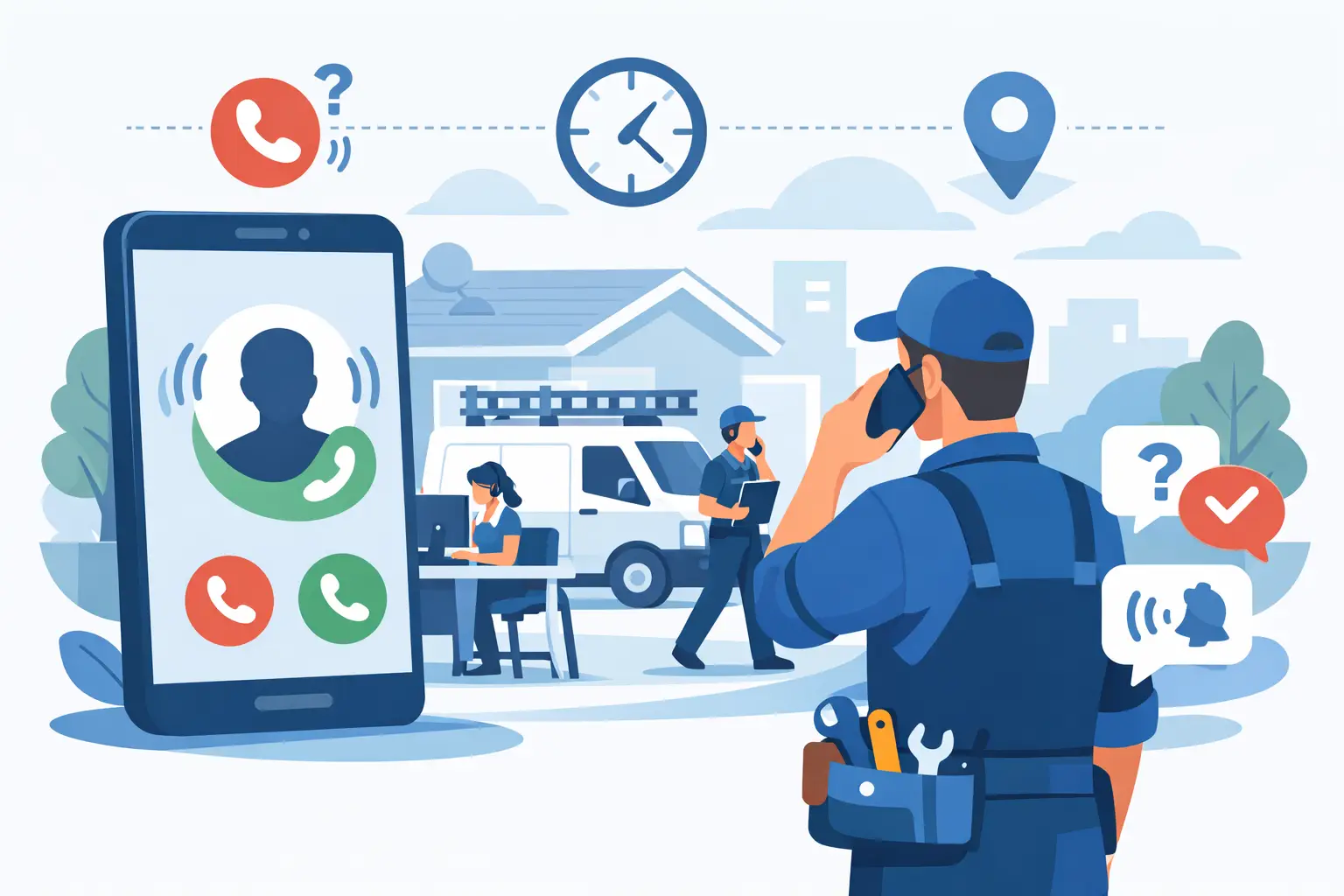
The phone rings while your CSR is taking payment, your dispatcher is rerouting a tech, and your owner is out looking at a big replacement job. That one missed call might be a clogged drain, a no-cool emergency, or a new maintenance customer ready to book. If you want to know how to reduce missed calls, start by treating every unanswered call like a revenue leak, not just a front desk problem.
For field service companies, missed calls usually have less to do with effort and more to do with broken workflows. The office gets slammed at peak hours. Calls come in after hours. Techs call the main line because they cannot find job notes. Customers call twice because no one texted an ETA. Before long, your team is reacting instead of controlling the day.
How to reduce missed calls starts with the real cause
Most contractors assume the answer is hiring another office person. Sometimes that helps. Often it just adds payroll to a process that is already messy.
The better move is to identify why calls are being missed in the first place. In most service businesses, it comes down to three issues: too many calls hitting one person, too many calls that should not require a call at all, and no system for handling overflow.
A plumbing company running 20 jobs a day does not just get booking calls. It gets technician questions, customers asking where the tech is, vendors calling back, warranty follow-ups, payment questions, and after-hours emergencies. If all of that lands on the same line with no routing logic, missed calls are guaranteed.
That is why reducing missed calls is not just about answering faster. It is about reducing unnecessary call volume, routing the right calls to the right place, and making sure no customer hits a dead end.
Fix the office bottlenecks before adding headcount
If your front office is buried from 7:30 to 9:00 a.m. and again from 3:30 to 5:00 p.m., you do not have a people problem first. You have a capacity planning problem.
Start by looking at your call patterns by hour and by day. Most shops already know the rough rhythm, but rough is not good enough. You need to know when the spikes happen, how many calls go unanswered during those windows, and what kind of calls they are. A burst of new customer calls needs a different response than a burst of technician check-ins.
Once you have that picture, adjust coverage around the actual demand. That may mean staggering start times, shifting one office person off low-value admin work during peak call windows, or having a dispatcher handle only dispatch during the morning rush while someone else owns inbound calls.
There is a trade-off here. Pulling experienced staff off other tasks can slow down invoicing, scheduling updates, or parts ordering. But if the alternative is losing booked work, the math is usually clear.
Cut down calls that should be texts, updates, or self-serve actions
A big percentage of inbound calls come from preventable uncertainty. Customers call because they do not know if the tech is on the way. Techs call because they cannot access job history. Office staff call techs because notes were not updated in real time.
Every one of those gaps creates call volume that crowds out revenue calls.
The fastest way to reduce it is better operational visibility. When customers automatically get confirmation messages, appointment reminders, and ETA updates, they stop calling to ask simple status questions. When technicians can pull up job details, photos, line items, and customer history from the field, they stop relying on the office for basic information. When dispatch can see where techs are and what jobs are slipping, fewer calls are needed just to keep the board current.
This is where a disconnected stack hurts. If your phone system, scheduling board, CRM, and technician workflow all live in different places, your office becomes the human bridge between systems. That creates more handoffs, more delays, and more missed calls.
Use call routing that matches how your business actually runs
A lot of service businesses still answer every call the same way, which sounds fair but performs badly. Emergency service calls, existing customer questions, vendor calls, and recruiting inquiries should not all compete for the same person in the same queue.
Basic routing can make an immediate difference. Separate after-hours emergency calls from routine inbound traffic. Route active customer issues differently from new leads. Give technicians a dedicated internal path so they are not clogging the public line. If your team serves multiple trades or service areas, route accordingly.
The goal is not to create a complicated phone tree that annoys customers. The goal is to cut friction. Good routing gets urgent, bookable work to the front of the line and keeps low-priority calls from swallowing your best office time.
It depends on your size. A small five-truck operation may only need a simple option for emergencies and a dedicated technician line. A larger shop with multiple dispatchers and service divisions will benefit from more granular routing. Either way, the system should reflect your operation, not force your team into generic call handling.
After-hours coverage is where most revenue slips away
Many contractors are decent at answering calls during business hours and terrible at handling nights, weekends, and overflow. That is a problem because urgent service demand does not care about office hours.
If you advertise emergency service but let calls hit voicemail after 5:00 p.m., you are paying to generate leads you do not capture. Even if your company does not run 24/7, customers still expect a response path.
A live answering service can help, but quality varies and handoff mistakes are common. Generic agents often struggle with trade-specific questions, and every bad intake creates more office cleanup the next morning.
That is why more contractors are using AI voice reception to cover overflow and after-hours calls. Done right, it does more than answer. It can collect the right job details, identify urgency, log the customer accurately, and push the call into scheduling or dispatch workflows without charging extra for basic capability. That matters when competitors keep stacking add-on fees for tools you actually need to run the business.
Train for speed, but script for consistency
Missed calls are expensive. Mishandled calls are expensive too.
If your team answers fast but asks weak questions, fails to capture job details, or cannot move a caller toward a booked appointment, you still lose margin. The fix is not a robotic script. It is a structured intake process that keeps the conversation sharp.
Your office team should know how to confirm service type, location, urgency, customer status, and the next step in under a few minutes. They should also know when to stop over-talking. Customers calling with no heat or a backed-up sewer line do not want a long conversation. They want confidence and a scheduled solution.
Consistency matters even more when multiple people answer phones. Without a standard process, one CSR books aggressively, another sends everything to dispatch, and a third forgets to tag leads correctly. That inconsistency creates follow-up calls, scheduling confusion, and lost jobs.
Connect missed call follow-up to dispatch, not just voicemail
If a call is missed, the recovery process has to move fast. Waiting until someone checks voicemail between tasks is too slow, especially for demand-driven trades.
The better setup is immediate missed-call visibility tied to the team that can act. New customer calls should trigger rapid follow-up. Existing customer issues should route to the office or service manager based on job context. Emergency requests should be flagged differently from general inquiries.
This is where integrated systems outperform patchwork tools. When call activity is tied to customer records, job history, and dispatch context, your team does not waste time figuring out who called and why. They can call back prepared, which improves conversion and shortens the interaction.
ServiceMerge is built for this kind of operation - where phones, scheduling, dispatch, customer history, and AI-assisted workflows work together instead of creating more office labor.
Measure missed calls like a sales and ops metric
If you are serious about how to reduce missed calls, track it the same way you track close rate, average ticket, and technician utilization.
At minimum, watch missed call rate, response time to missed calls, booking rate by call source, after-hours capture rate, and peak-hour performance. Those numbers tell you whether the issue is staffing, process, routing, or follow-up.
They also help you avoid the wrong fix. If your missed calls are concentrated during lunch, you may need coverage changes, not new software. If most missed calls happen after hours, overflow handling is the real issue. If answer rates are fine but bookings are weak, the problem is intake quality, not volume.
The point is simple: what gets measured gets fixed faster.
Reducing missed calls is not about making the office feel less busy. It is about protecting revenue, dispatching faster, and creating a customer experience that wins the next job before your competitor even picks up. Every unanswered call is a signal. Clean up the workflow behind it, and the phones stop feeling like chaos.
Ready to run a smarter field service business?
Dispatch jobs, send invoices, collect payments, and track your techs in the field — with AI-powered scheduling, route optimization, and tools that cut admin work so your team stays on jobs, not paperwork. Built for many trades like plumbing, HVAC, roofing, and electrical — view the full list of trades.