Voice to Estimate Software for Contractors
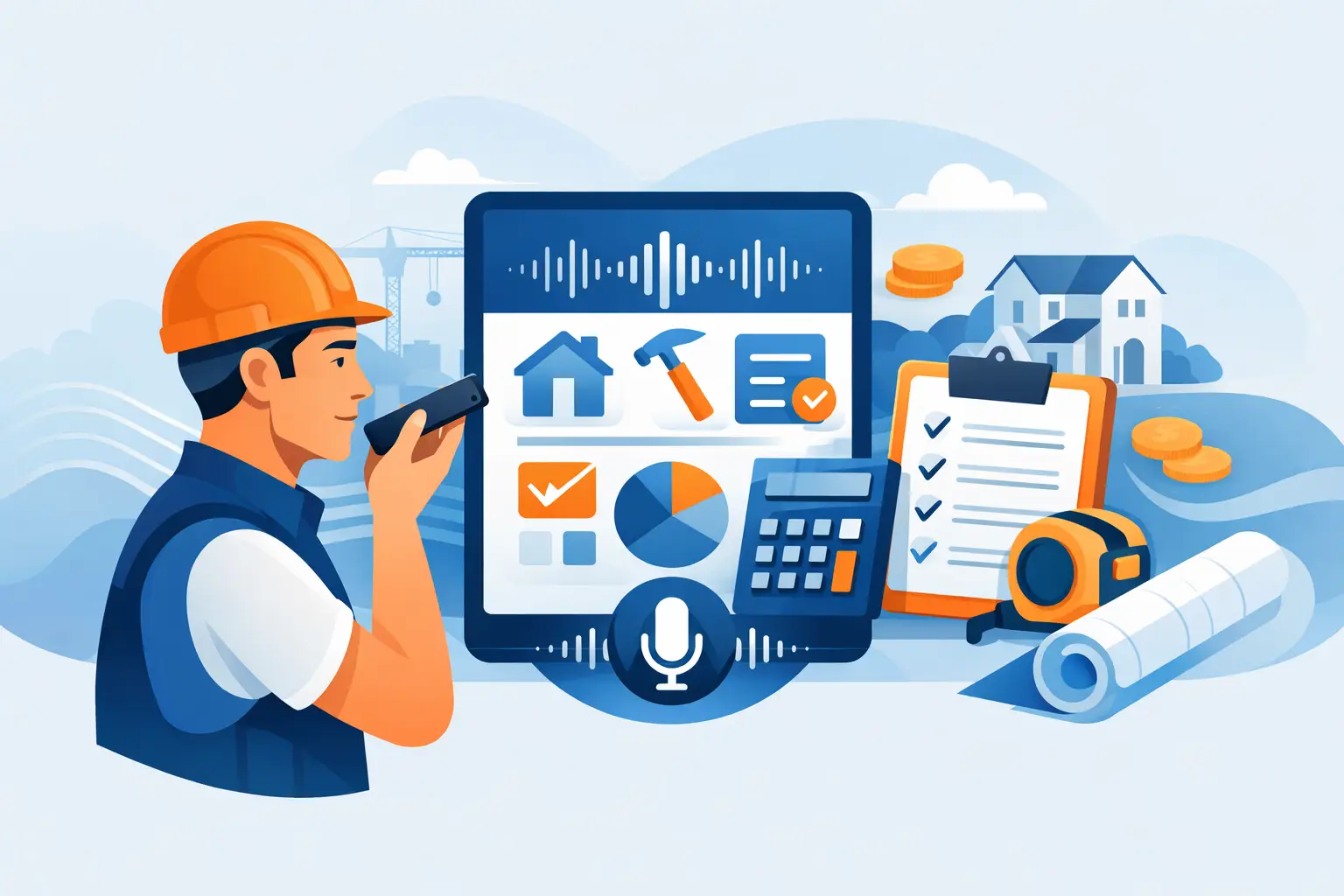
A tech finishes a service call, sits in the truck, and leaves a two-minute voice note with the scope, materials, and recommended work. The problem is what happens next. In a lot of shops, that audio turns into a callback, handwritten notes, a delayed estimate, and another office task nobody had time for. Voice to estimate software changes that handoff. It takes spoken job details and turns them into a structured estimate faster, with less back-and-forth and fewer missed revenue opportunities.
For contractors, speed matters because the customer usually isn’t waiting on just one quote. If your team can capture field details and get an estimate moving while the job is still fresh, you shorten the sales cycle and reduce admin drag at the same time. That is the real value here - not novelty, not fancy AI language, but more estimates out the door with less office effort.
What voice to estimate software actually does
At its core, voice to estimate software converts spoken job information into estimate-ready line items, notes, and pricing inputs. A technician or salesperson speaks naturally about what they found on site: system condition, recommended repairs, replacements, labor time, parts needed, and any customer requests. The software interprets that input and organizes it into something the office can review, price, and send.
The difference between basic speech-to-text and software built for estimating is context. Generic dictation tools can produce a transcript, but a transcript is not an estimate. Contractors need job details sorted into a usable structure. They need labor descriptions that make sense, line items that match their trade, and a workflow that feeds directly into estimating, scheduling, approvals, and invoicing.
That distinction matters most in field service. A plumbing company handling emergency calls, a roofing contractor building follow-up proposals, or an HVAC team quoting replacements all need accuracy, but they also need speed. If your technicians are talking into one app, then your office is retyping everything into another, you have not fixed the bottleneck. You have just moved it.
Why contractors are adopting voice to estimate software now
The pressure is coming from two sides. Labor is expensive, and customers expect faster response times. Owners are trying to grow without stacking more admin payroll on top of the business. At the same time, field teams are already carrying the information needed to build good estimates. The issue is getting that information into the system quickly and consistently.
That is where voice input makes sense. Speaking is faster than typing for most technicians, especially from the cab, the mechanical room, or the driveway between calls. It also removes one of the biggest points of resistance in the field: detailed documentation. When the process is easy, compliance improves. When compliance improves, estimate quality improves.
There is also a margin angle. Delayed estimates often mean forgotten details, underquoted labor, missed materials, or generic pricing that does not reflect the actual scope. Capturing job specifics by voice right after the visit can protect gross margin because the estimate is built from fresher information. You are not relying on memory at the end of the day.
Where voice to estimate software works best
This kind of software is strongest in trades where technicians diagnose problems on site and recommend next steps. HVAC, plumbing, electrical, drain, irrigation, aquatics, and handyman services all fit that model well. The tech sees the issue, explains the options, and needs a fast path from field notes to customer quote.
It is also useful for companies with a busy office that cannot afford to babysit every estimate. If dispatchers or coordinators are buried in calls, schedule changes, and payment follow-up, they do not need another manual task. They need estimate creation to start closer to the point of service.
That said, it is not a perfect fit for every workflow. Highly custom commercial bids with long takeoffs, engineering review, or layered approvals still need a more traditional estimating process. Voice can help gather field observations, but it will not replace detailed bid building in every scenario. Owners should look at where estimate delays are happening now and apply voice where it removes real friction.
What to look for in voice to estimate software
The first requirement is trade context. If the software does not understand how your business talks about equipment, parts, labor, and service recommendations, the output will create more cleanup than value. Good voice to estimate software should recognize trade-specific language and convert it into estimate-ready information, not just text blocks.
The second requirement is workflow connection. Estimates do not live on an island. They connect to customer records, job history, price books, technician notes, scheduling, approvals, and invoices. If the tool stops at transcription, your team still has to finish the real work manually. The best systems carry the voice input straight into the operating workflow.
Third, pricing control matters. AI can speed up estimate creation, but contractors still need to protect pricing discipline. You want software that supports your price book, labor rates, and approval process rather than inventing numbers without guardrails. Fast is good. Fast and wrong is expensive.
Mobile usability is another big factor. If field adoption is poor, the feature will sit there unused. Technicians should be able to trigger it quickly, speak naturally, and move on to the next call. If they need five screens and a training session every time they use it, adoption will collapse.
The trade-offs nobody should ignore
There is real upside here, but there are trade-offs. Voice input can capture details quickly, yet it still depends on the quality of what the technician says. If the description is vague, the estimate will be vague. Garbage in, garbage out still applies.
You also need process standards. One tech might give excellent, structured verbal notes. Another might ramble, skip material details, or forget labor considerations. Companies that get the best results usually set a simple framework for how techs speak their findings: problem, scope, parts, labor, options, and urgency.
Accuracy is another area where expectations should stay grounded. Voice to estimate software can dramatically reduce admin time, but it should not eliminate review. Especially for higher-ticket work, someone should still confirm scope, pricing, and customer-facing language before the quote goes out.
Then there is the platform question. Some vendors treat AI features like paid extras layered on top of disconnected systems. That can get expensive fast, and it often creates one more tool to manage. Contractors usually get better operational results when voice estimating is built inside the same platform that handles dispatch, CRM, invoicing, and payments.
How voice to estimate software improves the whole operation
The obvious win is faster estimates, but the bigger gain is operational continuity. Field information enters the business once and can move through the next steps without being recreated. That reduces lag between diagnosis and quote, quote and approval, approval and job scheduling.
It also improves accountability. When job details are captured in a structured way, managers can see what was recommended, what was quoted, and what was sold. That helps with technician coaching, sales tracking, and margin analysis. Over time, better estimate data leads to better business decisions.
There is a customer experience upside too. Homeowners and property managers do not care how many systems your office uses. They care that the quote is clear, timely, and professional. If voice-driven estimating helps you respond faster with fewer mistakes, it makes the company look sharper.
For businesses pushing growth, that matters. More leads and more calls only help if your team can convert them without adding chaos. Voice to estimate software supports scale because it removes one of the most common choke points in service operations: turning field knowledge into billable work.
A smarter standard for modern service businesses
The real question is not whether voice technology sounds impressive. It is whether it helps your team quote work faster, protect margin, and reduce office overhead. For many contractors, the answer is yes - if the software is built for field service and connected to the rest of the workflow.
That is why platforms like ServiceMerge are pushing this category forward. When voice-to-estimate generation sits inside a broader field service system, it stops being a gimmick and starts becoming an operating advantage.
Contractors do not need more software features for the sake of features. They need fewer handoffs, fewer delays, and more completed jobs. If your estimates are getting stuck between the field and the office, voice may be the fastest way to clear the lane.
Ready to run a smarter field service business?
Dispatch jobs, send invoices, collect payments, and track your techs in the field — with AI-powered scheduling, route optimization, and tools that cut admin work so your team stays on jobs, not paperwork. Built for many trades like plumbing, HVAC, roofing, and electrical — view the full list of trades.