Plumbing Scheduling Software That Pays Off
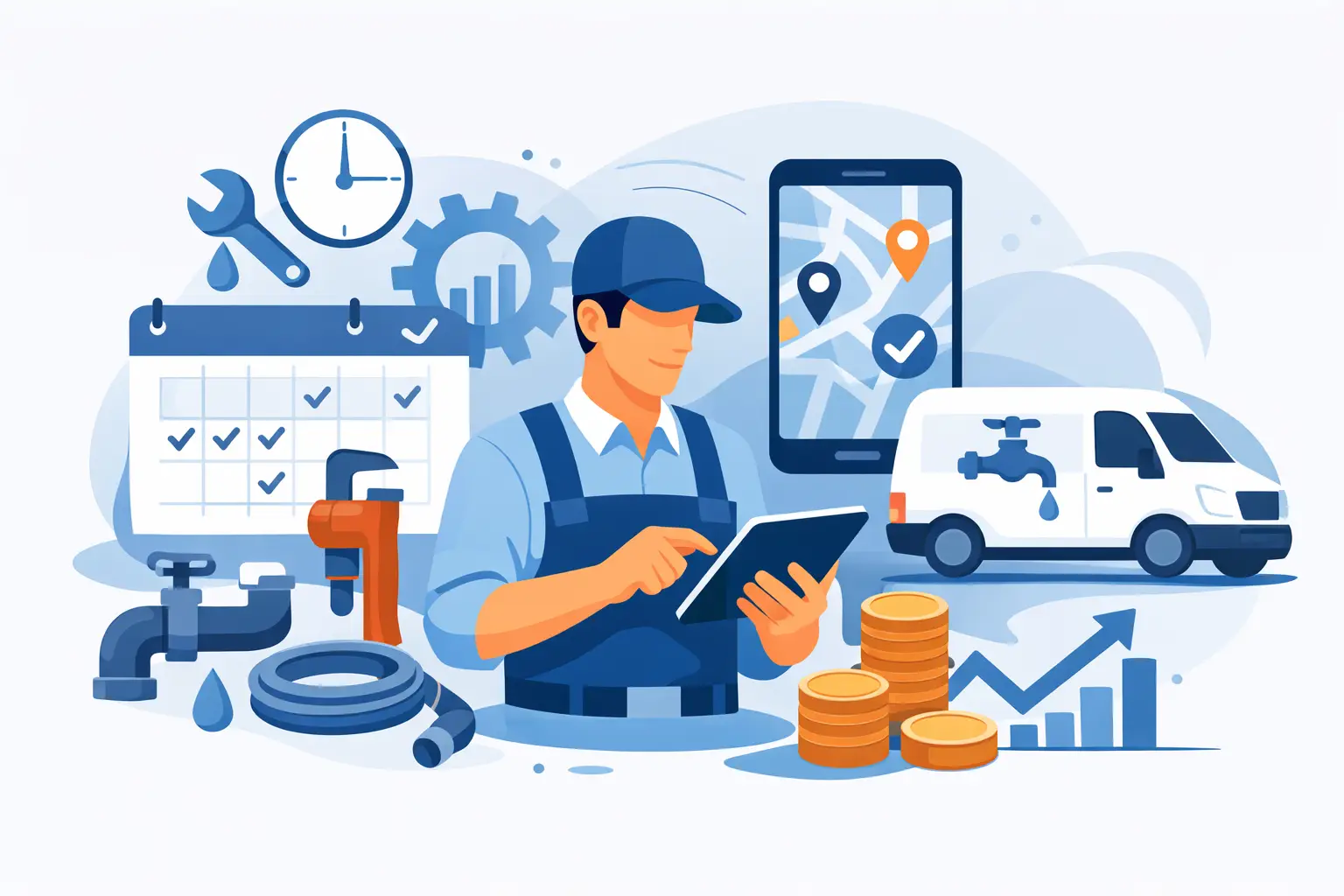
A backed-up water heater at 7:10 a.m., two techs calling out route conflicts, and a customer asking if someone can come before noon - that is where plumbing scheduling software either earns its keep or gets exposed fast. For plumbing shops, scheduling is not a calendar problem. It is a revenue, labor, and response-time problem that hits every part of the day.
The right system does more than drag jobs onto a board. It helps your office team place the right technician on the right call, adjust in real time when the day goes sideways, and keep customers informed without creating more admin work. If your current setup still depends on whiteboards, spreadsheets, sticky notes, or a patchwork of apps, you are probably paying for that chaos in overtime, windshield time, and lost jobs.
What plumbing scheduling software should actually fix
Plumbing companies do not need prettier software. They need fewer gaps between the call, the dispatch, the job, and the payment. That is the real standard.
Good plumbing scheduling software should reduce dead time between appointments, make same-day changes easier to manage, and help dispatchers see capacity before the schedule gets overbooked. It should also connect scheduling to estimating, invoicing, and technician updates in the field. If your scheduling tool stops at assigning appointments, it is only solving part of the problem.
This matters even more in plumbing because your work mix changes by the hour. Emergency leak calls do not behave like water heater installs. Drain cleaning does not schedule like repipes. Maintenance jobs may be flexible, but service calls are often urgent and highly localized. A system that treats every job the same creates friction where you can least afford it.
The cost of weak scheduling in a plumbing business
Most owners notice the obvious problems first. Late arrivals upset customers. Dispatchers get buried in phone calls. Techs waste time driving across town for jobs that could have been grouped better. But the deeper costs usually show up in margin.
When scheduling is loose, labor utilization drops. One technician has too much stacked into the day while another ends up with idle gaps. Overtime climbs because the office team cannot rebalance routes quickly enough. Quoted arrival windows get missed, which hurts close rates on future work and drives avoidable callbacks from frustrated customers.
Then there is the office overhead. Manual scheduling creates extra status checks, more customer follow-up calls, and more opportunities for data entry mistakes. Every time someone has to retype job details from one tool into another, your team slows down and the chance of error goes up.
The hard truth is simple: bad scheduling is not an inconvenience. It is a leak in the operation.
What to look for in plumbing scheduling software
A plumbing contractor needs live visibility, not static plans. The best platforms give dispatchers a real-time view of technician availability, job progress, travel time, and priority level. That lets your office react to the day as it actually unfolds.
Capacity planning is one of the first things to look at. Can your team quickly see who has room for another call? Can they filter by technician skill, zone, or job type? A plumber who handles diagnostics and service work may not be the right fit for a tankless install, and your schedule should reflect that without forcing dispatch to guess.
Mobile workflow matters just as much. If technicians cannot update job status from the field, your schedule gets stale fast. Plumbing scheduling software should let field staff mark when they are en route, on site, paused, or complete. That keeps the board accurate and cuts down on radio silence between the truck and the office.
Customer communication should also be built in. Appointment confirmations, ETA updates, and job notifications reduce inbound calls and help customers stay ready for the visit. Some companies still bolt this on through separate tools, but every extra add-on increases complexity and cost.
And then there is dispatch intelligence. Basic scheduling software lets you assign jobs. Better software helps you assign them smarter based on geography, urgency, technician capability, and current workload. That difference shows up in route density, first-time completion rates, and the number of jobs you can run in a day.
Why all-in-one beats disconnected tools
A lot of plumbing businesses outgrow their systems in stages. They start with one tool for booking, another for invoicing, maybe a separate app for estimates, and a texting platform layered on top. It works for a while, until the volume increases and the handoffs start breaking.
That is where all-in-one plumbing scheduling software starts to separate itself. When scheduling sits inside a wider field service platform, the office can move from lead intake to dispatch to invoice without bouncing between tabs. Job details stay attached to the work order. Technician notes feed directly into billing. Payments can be collected as soon as the work is done.
This is not just about convenience. It speeds up cash flow and reduces admin hours. If the dispatcher, CSR, technician, and bookkeeper are all working from the same system, you get fewer missed details and faster decisions.
It also gives owners better control. You can track technician productivity, response times, average ticket value, and route efficiency without exporting data into a separate reporting tool. When software is fragmented, reporting usually becomes delayed and unreliable. That makes it harder to improve the schedule because you are looking backward instead of managing forward.
AI changes the scheduling equation
AI in field service gets talked about too loosely, so it is worth being specific. In plumbing scheduling software, AI should help reduce repetitive office work and improve speed on real operating tasks.
That can mean handling inbound calls after hours, helping convert call details into job records, suggesting the best technician for a service window, or surfacing quote recommendations based on the job type. Used well, AI shortens the time between customer request and scheduled appointment. It also helps smaller office teams handle more volume without adding headcount immediately.
There is a trade-off, though. AI only helps when it is built into the workflow and trained around actual service operations. If it is treated like a flashy extra feature that sits off to the side, your team will ignore it. The best systems make AI practical, not theatrical.
That is one reason contractor-focused platforms stand out. A platform like ServiceMerge is built around dispatching, estimating, invoicing, technician workflows, and embedded AI in one operating system, which is a very different value proposition than buying a basic scheduler and then paying extra for each missing function.
When plumbing scheduling software is worth the switch
Not every plumbing company needs to replace software tomorrow. If you run a small operation with light volume, limited service area complexity, and a stable office workflow, your current setup may still be serviceable. But there are clear signs you are hitting the ceiling.
If dispatchers are constantly reshuffling jobs by phone, if technicians spend too much time waiting on updates, if customers keep asking for ETAs your office cannot answer confidently, or if invoicing lags behind completed work, your scheduling process is already costing you money.
Growth usually makes the problem impossible to ignore. What feels manageable at five technicians starts breaking at ten. The office team that could once keep the day organized from memory suddenly cannot keep pace. Software becomes less about convenience and more about whether the business can scale without adding unnecessary overhead.
How to evaluate plumbing scheduling software without wasting time
Start with your actual workflow, not the demo script. Look at how a customer request becomes a booked job, how that job gets assigned, how the tech updates progress, and how the invoice gets sent and paid. If any of those steps require duplicate entry or side conversations outside the system, the process still has drag in it.
Ask how the platform handles emergency calls, recurring maintenance, multi-tech jobs, and last-minute schedule changes. Plumbing work is too dynamic for rigid scheduling logic. You want a system that can support both booked work and the chaos of same-day service.
Also pay attention to what is included versus what costs extra. This is where buyers get burned. A low starting price can look good until dispatching tools, customer communications, mobile functionality, payments, or reporting show up as paid add-ons. The monthly cost is only part of the equation. You should also measure the admin hours saved, the extra jobs booked, and the speed of payment collection.
Plumbing scheduling software should create leverage. It should help one dispatcher manage more volume, help technicians stay productive between calls, and help owners tighten control over labor and cash flow. If it cannot do that, it is just another expense dressed up as efficiency.
The best software does not make the day perfect. Plumbing is still plumbing. Jobs run long, emergencies hit, customers reschedule, and traffic does what it does. But the right system gives your team a faster, tighter way to respond, and that is what separates busy companies from profitable ones.
Ready to run a smarter field service business?
Dispatch jobs, send invoices, collect payments, and track your techs in the field — with AI-powered scheduling, route optimization, and tools that cut admin work so your team stays on jobs, not paperwork. Built for many trades like plumbing, HVAC, roofing, and electrical — view the full list of trades.