AI Receptionist for Contractors That Books Jobs
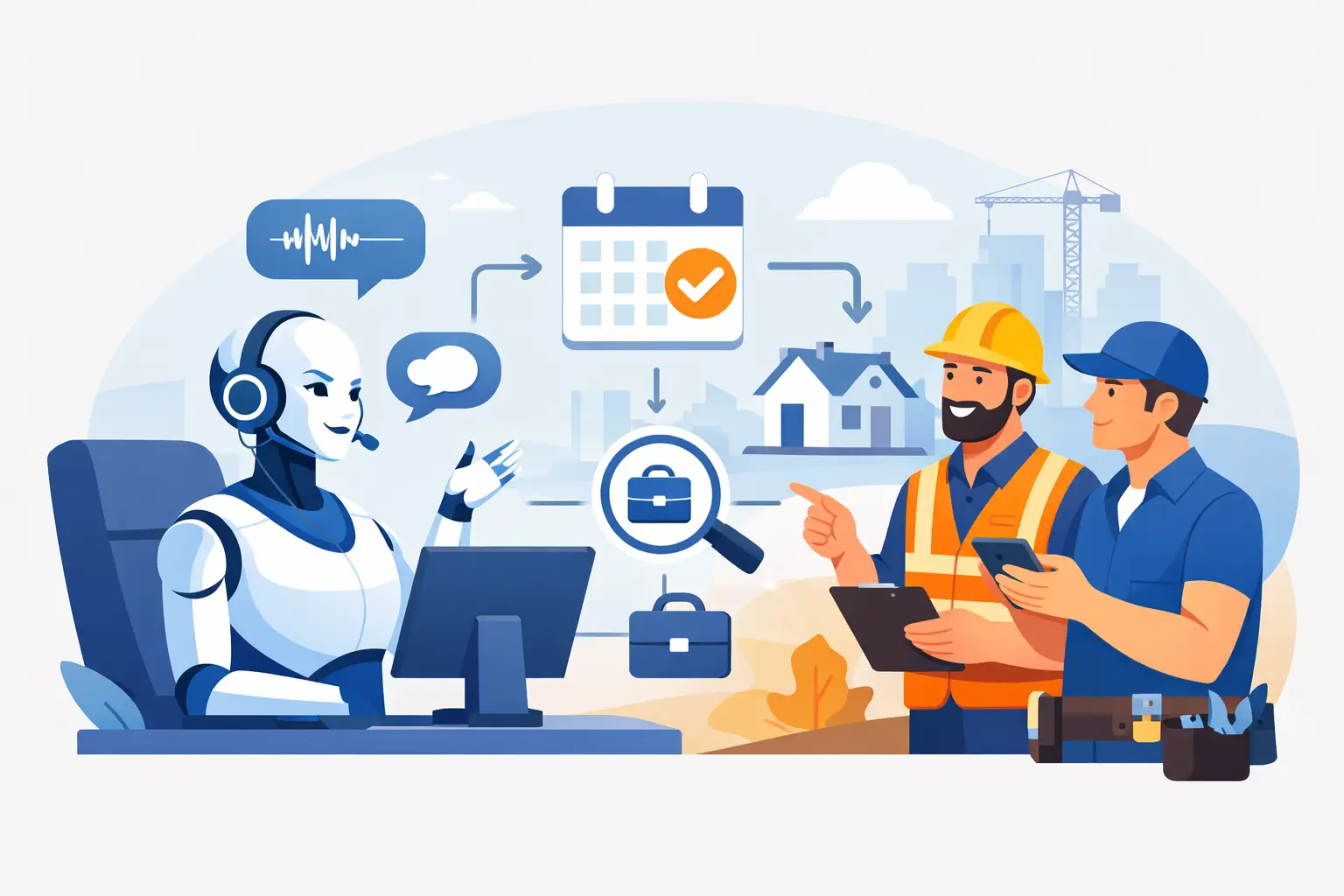
Every contractor knows the math on missed calls. A customer calls with a leaking water heater, no one picks up, and that job goes to the next company in search results. An ai receptionist for contractors fixes that gap fast - not as a gimmick, but as a real front-line system for booking work, qualifying leads, and keeping the office from getting buried.
For service businesses, the phone is still a revenue channel. It is also one of the easiest places to lose money. After-hours calls, lunch-break voicemails, overflow during peak season, and dispatchers juggling five things at once all create the same problem: demand shows up, but your process does not. If you are paying for ads, building a reputation, and training techs, losing jobs because the phone rings too long is a costly way to stay stuck.
What an AI receptionist for contractors actually does
At a basic level, an AI receptionist answers inbound calls, speaks with the customer, gathers job details, and routes the next step. But for contractors, basic is not enough. The real value comes from how well it handles trade-specific conversations and how tightly it connects to scheduling, dispatch, estimating, and customer records.
A generic answering tool can take a message. A contractor-ready system should do more. It should identify whether the caller is a new lead or an existing customer, capture the problem in plain language, ask the right follow-up questions, and book or escalate based on urgency. If someone says their AC is out, the system should treat that differently in July than a routine maintenance call in October.
That distinction matters because your office is not just answering phones. It is triaging revenue. Emergency, warranty, maintenance, sales, collections, and reschedules all need different handling. If the AI cannot work inside those real-world workflows, it just creates another inbox for your team to clean up later.
Why contractors are replacing missed calls with AI
Hiring more office staff is expensive, and it does not fully solve coverage. You still have breaks, call spikes, turnover, training time, and after-hours gaps. An AI receptionist gives coverage without adding another full-time salary every time volume increases.
The bigger advantage is consistency. Human teams vary by experience, energy, and process discipline. A strong AI receptionist follows the same call flow every time. It asks for the address, confirms contact details, captures the issue, and moves the job forward. That consistency protects revenue and gives dispatch cleaner information.
It also helps protect your brand. Customers do not care that your CSR is helping a tech with parts, processing a payment, and answering another line. They care that someone answered and sounded organized. Fast response feels professional. Professional companies win more jobs.
There is a trade-off, though. Not every call should stay with AI from start to finish. High-emotion situations, upset customers, or complex commercial accounts may still need a person. The best setup is not AI instead of staff. It is AI handling repetitive intake and overflow so your team can focus on exceptions, upsells, and service recovery.
Where an ai receptionist for contractors creates the biggest ROI
The first win is simple: fewer missed opportunities. If your business misses even a handful of calls a week, the lost revenue adds up quickly. One booked emergency call can cover a meaningful chunk of software cost. Ten recovered jobs a month can change the math on growth.
The second win is lower office drag. When dispatchers and CSRs spend less time repeating the same intake questions, they can focus on schedule quality, route efficiency, technician support, and customer follow-up. That is where margin improves.
The third win is speed. Calls that turn into booked appointments faster create a tighter operation. Instead of voicemail, callbacks, and scheduling lag, the customer gets an answer and your board gets updated. Faster booking usually means faster job completion and faster payment.
There is also a reporting benefit that many contractors overlook. When call handling is digital, you get cleaner visibility into call volume, booking rates, after-hours demand, common job types, and lead quality. That data helps you decide staffing, ad spend, and service area priorities with less guesswork.
What to look for in an AI receptionist for contractors
If you are evaluating options, start with workflow, not features on a sales sheet. The question is not whether the system can answer a call. The question is whether it can move work through your operation without creating friction.
Trade awareness matters first. A roofing company, a drain cleaning company, and an HVAC service business do not speak the same way on the phone. The receptionist should understand the vocabulary, urgency, and call patterns of your trade.
Next, look at scheduling and dispatch connection. If the AI captures a lead but your team still has to manually re-enter everything, you are only solving part of the problem. The strongest setup pushes call data directly into the customer record, creates or updates the job, and supports scheduling from the same system.
You also want configurable call flows. Some companies want emergency calls escalated immediately. Others want maintenance calls routed to a queue. Some want financing conversations flagged for sales follow-up. A one-size-fits-all script will break under real field conditions.
Finally, listen for voice quality and conversation control. Customers can tell when a system sounds clunky. If the AI cannot keep the call moving naturally, callers may ask for a human or hang up. That is especially risky on urgent jobs, where patience is short.
The operational difference between a standalone tool and a built-in system
This is where many contractors make the wrong call. A standalone answering tool might seem cheaper upfront, but disconnected tools often cost more in admin time, errors, and lost speed. When your receptionist tool sits outside your field service platform, someone usually has to bridge the gap manually.
That means retyping customer notes, fixing incomplete records, chasing recordings, and updating the schedule after the fact. It slows dispatch and makes your team the integration layer.
A built-in AI receptionist works better because the phone interaction is part of the same operating system as your CRM, scheduling, estimates, invoices, and technician workflows. The call does not just get answered. It becomes structured work inside the business.
That is the difference between automation theater and real operational gain. Contractors do not need another dashboard. They need fewer handoffs and more booked jobs.
Common concerns contractors have before turning on AI
The biggest concern is usually customer experience. Owners worry that callers will hate talking to AI. Sometimes that concern is valid, especially if the system sounds rigid or gets confused easily. But when the voice flow is built for service calls and the handoff rules are smart, many customers care more about fast help than whether a human answered first.
The second concern is control. Office managers want to know what happens when a call is unusual. The answer should be configurable escalation. Good systems let you define when AI handles intake, when it books directly, and when it hands off to staff.
The third concern is whether AI will replace office staff. For most growing service companies, that is the wrong frame. The better use case is making your current team more productive. Let AI handle repetitive front-end call work while your people manage schedule quality, exceptions, customer retention, and collections.
When it makes sense to implement now
If your business is missing calls, relying heavily on voicemail, or watching office staff drown during peak periods, the timing is already good. The same goes if you are paying for lead generation and do not have consistent phone coverage.
It also makes sense when growth is putting pressure on your back office. Many contractors hit a point where adding jobs creates chaos faster than revenue. An AI receptionist helps absorb volume without forcing every new dollar through more manual admin.
For companies already using an all-in-one platform, implementation is usually strongest when the receptionist is tied directly to dispatch, CRM, and estimating. ServiceMerge is built around that model, which matters because contractors do not need isolated AI features. They need AI that helps the office and field work faster from the same system.
The bottom line on AI phone coverage
An AI receptionist is not valuable because it sounds futuristic. It is valuable because it answers the phone, captures revenue, reduces office load, and keeps jobs moving. For contractors, that is what the technology has to prove.
If your phone process still depends on who happens to be free when it rings, you are leaving too much to chance. The better move is simple: make every inbound call easier to book, easier to dispatch, and easier to turn into cash. That is how growth gets real.
Ready to run a smarter field service business?
Dispatch jobs, send invoices, collect payments, and track your techs in the field — with AI-powered scheduling, route optimization, and tools that cut admin work so your team stays on jobs, not paperwork. Built for many trades like plumbing, HVAC, roofing, and electrical — view the full list of trades.